

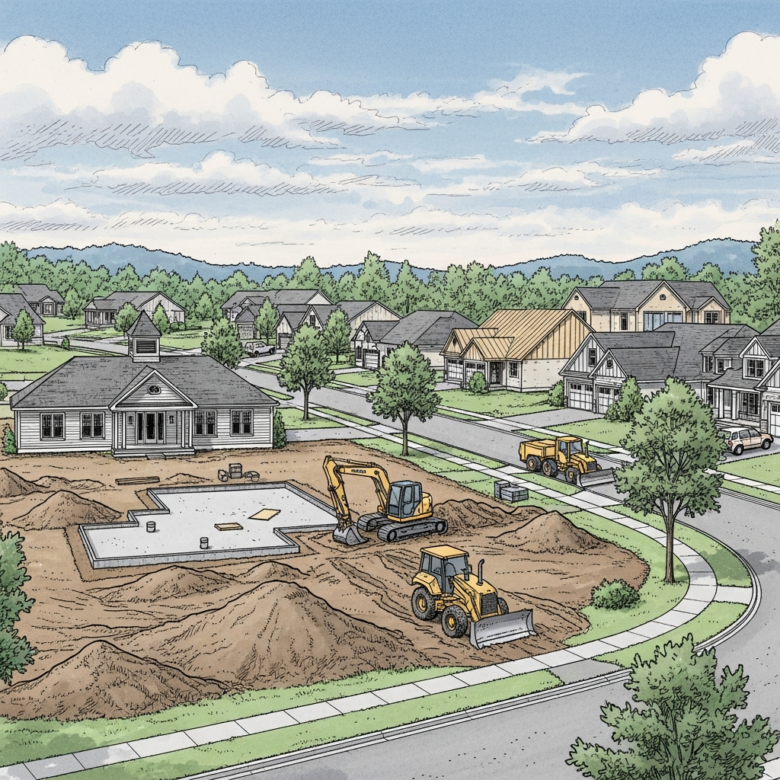
Approved Planning Board minutes now show Wilton gave the big Forest Grove subdivision another extension in March while the developer reported strong sales, ongoing deliveries, and clubhouse work starting.
Wilton’s newly posted approved minutes from March 18, 2026 show the Planning Board granted another 90-day extension for **Forest Grove Phase 3**, a major piece of the long-running subdivision off Jones, Putnam, Bullard and Scout roads. During the same discussion, the developer reported that clubhouse grading had started, 150 homes were sold, and 111 had already been delivered.
A large Wilton subdivision kept moving forward on March 18, but not through a flashy new approval. Instead, it advanced in the quieter way major projects often do: another extension.
According to the newly surfaced approved Planning Board minutes, Wilton granted Forest Grove Phase 3 a 90-day extension for a portion of the project described as a 190-lot subdivision within the broader Forest Grove conservation subdivision.
What the town approved
The board approved an extension request for Phase 3 of the project on land associated with:
- Jones Road,
- Putnam Lane,
- Bullard Lane, and
- Scout Road.
The agenda and minutes describe the broader subdivision history as one that had expanded from 321 lots to 421 lots.
That may sound procedural, but these extensions matter. They keep major development approvals alive and allow buildout to continue without forcing a full restart.
What the developer told the board
The March 18 minutes also give a status report that had not been obvious from recent public-facing town pages.
Representatives said:
- grading for the clubhouse had begun;
- clubhouse construction was expected to start in late March or early April 2026;
- 150 homes had been sold; and
- 111 homes had already been delivered.
In short, this is no paper subdivision sitting idle. It is actively converting approvals into occupied homes.
Why this deserves attention
Big projects do not only move at public hearings packed with neighbors. They also move through routine-seeming extensions, status reports, and incremental board actions that get much less attention.
That can be appropriate when a project is substantially underway. But it also means residents who are not reading meeting minutes can miss how much of Wilton’s growth is now in the execution stage rather than the debate stage.
The larger question
Forest Grove is a reminder that once a development reaches this phase, the town’s leverage changes. The main public fights are usually over. After that, oversight often becomes about deadlines, compliance, phasing, and whether promised amenities actually materialize.
From a skeptical taxpayer and property-rights perspective, the fair question is not whether every extension is suspicious. It is whether Wilton gives residents a clear enough running record of what was approved, what changed, and what obligations still remain.
Right now, the minutes help. But residents should not have to rely on newly surfaced PDFs weeks later to understand the status of one of the town’s larger residential buildouts.