

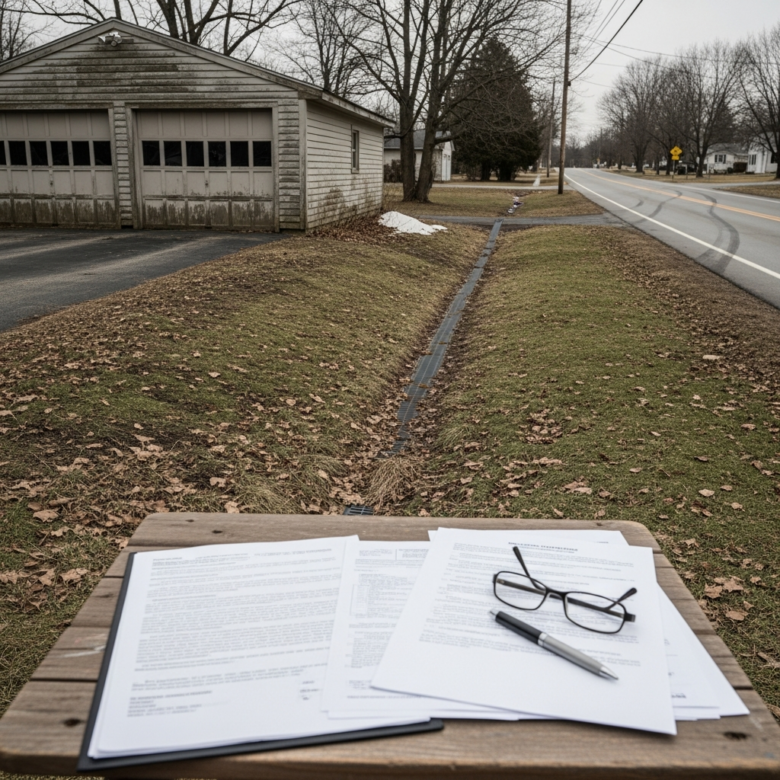
March 5 Town Board materials show Wilton escalated the 716 Wilton-Gansevoort Road dispute to Supreme Court, turning a years-long septic and drainage fight into a higher-stakes legal case.
March 5 Town Board records show Wilton authorized Supreme Court litigation against the owner of 716 Wilton-Gansevoort Road after earlier enforcement steps, including Justice Court proceedings, failed to bring the property into compliance. The dispute involves unresolved septic issues and garage-drainage conditions tied to a 2022 variance. ([townofwilton.ny.gov](https://townofwilton.ny.gov/government/meeting-agendas/town-board-agenda-03-05-26-resolution-authorize-litigation/?utm_source=openai))
This is the kind of local-government story that usually stays buried until legal bills start to pile up. Wilton’s March 5, 2026 Town Board materials show the board approved Resolution #112, authorizing Supreme Court litigation to enforce Town Code, Uniform Code, and Property Maintenance Code claims at 716 Wilton-Gansevoort Road. The stated goal was injunctive relief, civil penalties, and recovery of enforcement expenses. (townofwilton.ny.gov)
The background matters. A December 8, 2022 Zoning Board of Appeals decision granted a variance for a detached garage at the property, but only on the condition that the owners install both a swale and gutters to direct runoff away from the neighbor’s property. March 5 materials show Wilton now says those conditions remain unresolved, alongside septic-related violations. (townofwilton.ny.gov)
The March 5 Town Board agenda laid the matter out bluntly: the board was asked to initiate Supreme Court action for code violations involving a failed septic system and failure to install the required drainage features. In the minutes text surfaced by search, Deputy Supervisor Connor Rohan said the case had dragged on for well over a year, possibly more than two, and said prior attempts within the town’s normal enforcement process had gone unheeded. Councilwoman Erinn Kolligian separately noted that the garage still did not have a certificate of occupancy. (townofwilton.ny.gov)
There are two ways to read this. The charitable reading is that Wilton is finally following through after lesser enforcement tools failed. The less charitable reading is that the town spent years stumbling through a relatively straightforward compliance case before reaching for a more expensive forum. Both readings can be true at once. If government wants broad enforcement powers, it also owes residents evidence that its lower-level process is competent, timely, and evenhanded. (townofwilton.ny.gov)
Why it matters beyond one property
This case is not just about one septic system or one set of gutters. It is a stress test for Wilton’s enforcement culture. A town that talks tough but cannot close out routine violations eventually has two bad options: look weak, or escalate late and expensively. Either outcome costs the public something — trust, money, or both. (townofwilton.ny.gov)
What to watch next
The public question now is not whether Wilton authorized suit. It did. The next question is whether the town can actually resolve the violations quickly, and how much taxpayer-backed legal work will be spent to get there. Wilton’s online record remains spotty enough that residents may have to watch future agendas and litigation references closely to see whether the case ends in compliance, settlement, or more process drift. (townofwilton.ny.gov)